Starting a business is exciting, but it comes with a whirlwind of decisions. One of the first and most important questions entrepreneurs face is: What’s the difference between a firm and a company? Whether you are learning through Online Business Training India or exploring practical business setups, understanding this distinction can save you time, money, and legal headaches.
In India, millions of people start ventures every year, from small partnerships to fully incorporated companies. Knowing the difference between a company and a firm, and which structure suits your goals, can be the key to your business success. Let’s break it down in a clear, practical, and even slightly humorous way.
What is a Firm? (Firm Meaning in Business)
In simplest terms, a firm is a business entity where one or more individuals collaborate to earn profits. The ownership and management are closely tied, meaning the people who run it usually own it too.
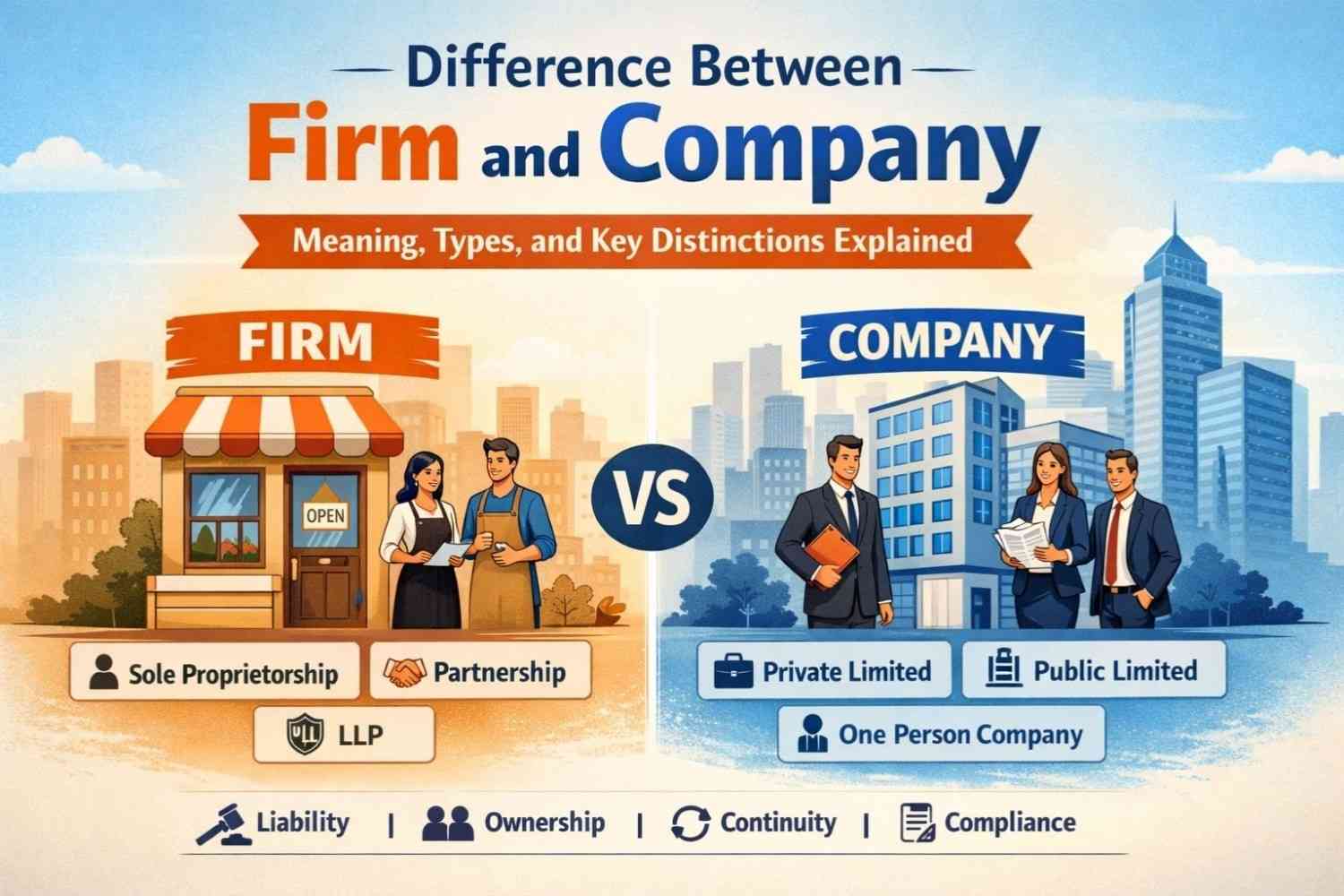
Types of Firms in India
- Sole Proprietorship: Owned and managed by a single individual. Example: Your local bakery or freelance graphic designer.
- Partnership Firm: Two or more partners share profits and responsibilities. Example: A law partnership.
- Limited Liability Partnership (LLP): Combines partnership flexibility with limited liability protection.
Key Characteristics of a Firm
- Owners bear personal liability for debts (except in LLPs).
- Registration is optional for partnerships and sole proprietorships, but mandatory for LLPs.
- Management is usually hands-on, without a formal board.
- Simple taxation structure: Profits are taxed at the personal level.
Running a firm is a bit like working in sweatpants, you’re comfortable, flexible, and fully in control… but if things go wrong, you feel it personally!
What is a Company? (Company Definition in Business)
A company is a legally incorporated entity recognized under the Companies Act, 2013 (India). It has a separate legal identity, meaning it exists independently of its owners.
Types of Companies in India
- Private Limited Company (Pvt Ltd): Popular for startups. Shareholders have limited liability.
- Public Limited Company: Can issue shares to the public. Example: Infosys Ltd.
- One Person Company (OPC): A single-member company with limited liability.
- Section 8 Company: Non-profit organizations operating for social causes.
Key Characteristics of a Company
- Separate the legal entity from the shareholders.
- Limited liability protects personal assets.
- Perpetual succession: The company continues despite ownership changes.
- Structured governance: Board of Directors and regular compliance requirements.
- Can raise capital through shares or investors.
Think of a company as giving your business a superhero cape; it protects you from the “villains” like debts and lawsuits while letting you grow bigger and faster.
Firm vs Company: Key Differences
To simplify, here’s a point-by-point comparison:
| Feature | Firm | Company |
| Legal Identity | Usually not separate | Separate legal entity |
| Liability | Unlimited (except LLP) | Limited |
| Ownership | Partners | Shareholders |
| Continuity | Ends if owners leave | Perpetual succession |
| Compliance | Minimal | Formal & regular |
| Taxation | Personal income tax | Corporate tax (may include dividend tax) |
Short explanations:
- Liability: In a firm, partners can be personally liable for business losses. In a company, shareholders risk only the capital invested.
- Ownership & Governance: Companies have formal structures with boards and shares, while firms are often informal partnerships or sole proprietorships.
- Continuity: Companies live on; firms dissolve if key partners leave.
Difference Between Firm and Company in India: Practical Scenarios
Understanding the differences is one thing; knowing which structure suits you is another.
Best for a Firm
- Solo Entrepreneurs: Freelancers, designers, consultants. Low cost and simple setup.
- Professionals in Partnerships: Lawyers, accountants, or architects benefit from flexibility.
- Low-Risk Ventures: Businesses with minimal debts or contracts.
Why choose a firm? Quick to start, less paperwork, full control. Downside: unlimited personal liability.
Best for a Company
- Growth-Oriented Startups: Planning to attract investors or scale operations.
- High-Risk Ventures: Tech or manufacturing businesses with significant capital or contracts.
- Team Ventures: Co-founders needing formal shareholding structure and governance.
Why choose a company? Legal protection, professional image, and easier funding. Downside: Higher setup and compliance costs.
Types of Business Organizations in India
Let’s put firms and companies in context with other business entities:
- Firms
- Sole Proprietorship
- Partnership
- LLP
- Companies
- Private Limited Company (Pvt Ltd)
- Public Limited Company
- One Person Company (OPC)
Understanding business entity differences helps in taxation, liability planning, and future scalability.
Taxation & Compliance Differences
Firms
- Profits are taxed at personal income tax rates.
- Minimal statutory filings.
- Easy accounting, but personal liability remains.
Companies
- Subject to corporate tax and applicable GST.
- Must maintain audited accounts and file annual returns.
- A separate legal entity reduces personal risk.
For small businesses doing Export Training in India or consulting in Business Counselling in India, knowing this difference helps in legal and financial planning.
Real-Life Example Scenarios
- Freelance Graphic Designer: Sole proprietorship (Firm) → low cost, easy setup.
- Tech Startup with Investors: Pvt Ltd Company → scalable, limited liability.
- Family-Run Bakery: Partnership Firm → flexible and simple.
- Manufacturing Venture: Private Ltd Company → high capital and formal governance.
When planning your venture, tools like Business Master Classes in Delhi or Online Business Training India can provide hands-on guidance. You can even check the location of providers like Rsrishti International Pvt. Ltd. on their Google My Business profile to get practical insights.
Frequently Asked Questions About the Firm and Company in India
A firm is generally a smaller, less formal business entity without a separate legal identity, while a company is incorporated, has limited liability, and a structured governance system.
Yes, many partnerships and LLPs incorporate as Pvt Ltd companies when they scale.
LLP combines partnership flexibility with limited liability, so it’s technically a firm with certain company-like features.
It depends on risk, capital needs, and growth plans. Solo ventures may prefer firms; investor-backed startups often choose Pvt Ltd companies.
Summary: Understanding the Firm and Company for Your Business
Understanding the difference between firm and company is essential before starting a business.
- Firms are simple, flexible, and cost-effective, ideal for small or professional ventures.
- Companies provide legal protection, formal structure, and growth opportunities, making them ideal for high-capital or team ventures.
Choosing the right structure impacts liability, taxation, scalability, and investor confidence. For a deeper dive, enrolling in Online Business Training India or consulting Rsrishti International Pvt. Ltd. (check their Google My Business profile) can give you practical guidance.
Whether you aim to master Export Training in India, seek Business Counselling in India, or attend Business Master Classes in Delhi, understanding these differences will help you start on a solid foundation.